


Anaplasmosis in Dogs: What Cincinnati and Loveland Pet Owners Should Know
Companion Animal Parasite Council's (CAPC) 2026 data shows that dogs in Clermont County are being exposed to Anaplasma. Year-round tick prevention and annual screening are important for dogs in the Cincinnati and Loveland areas—even when they appear healthy.
Ticks are more than an unpleasant nuisance. They can transmit diseases that affect your dog’s health, including anaplasmosis, a bacterial infection found in dogs throughout the Midwest and here in Southwest Ohio.
At Cincinnati Family Veterinary Services, we want dog owners in Cincinnati, Loveland, and surrounding communities to understand how anaplasmosis spreads, which symptoms may indicate a problem, and why year-round tick prevention and routine screening are so important.
What Is Anaplasmosis in Dogs?
Anaplasmosis is caused by bacteria transmitted through the bite of an infected tick. Two species may affect dogs:
- Anaplasma platys affects platelets (the blood cells that help with clotting) and is associated with the brown dog tick.
-
Anaplasma phagocytophilum primarily affects certain white blood cells and is usually transmitted by the blacklegged tick, also known as the deer tick.
The same blacklegged tick that can transmit anaplasmosis may also carry Lyme disease. This means dogs can sometimes be exposed to more than one tick-borne infection.
Anaplasmosis Is Present in Clermont County, Ohio
Anaplasmosis is not just a concern in other parts of the country. It's being detected in dogs right here in our own community.
According to the Companion Animal Parasite Council’s 2026 year-to-date data for Clermont County:

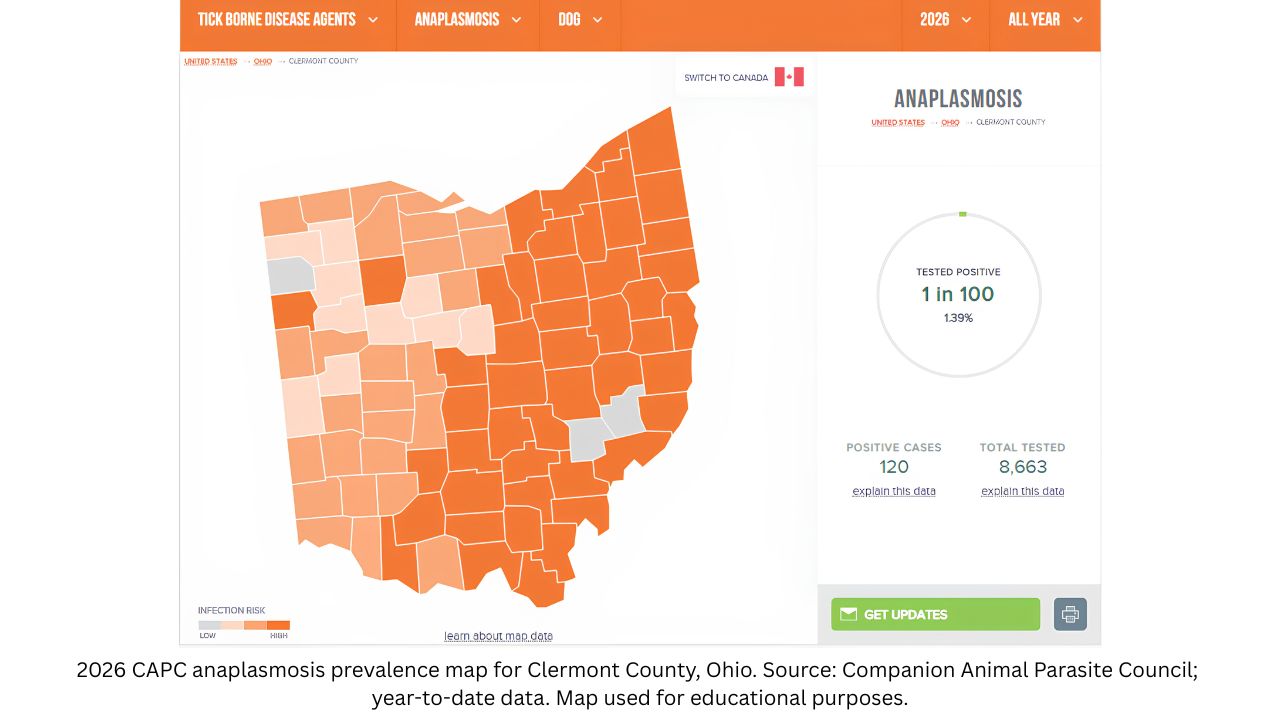
These results represent positive antibody tests, meaning the dogs had evidence of current or previous exposure to Anaplasma bacteria. A positive screening test does not necessarily mean a dog has an active infection or will become ill. However, these results do show that dogs in the local area are encountering infected ticks.
Because the CAPC map updates as additional dogs are tested, these figures may change throughout the year.
Is Anaplasmosis a Growing Concern in Ohio?
Although anaplasmosis has traditionally been more common in the Northeast and Upper Midwest, tick populations and tick-borne diseases continue to expand into new areas.
The Companion Animal Parasite Council’s 2026 forecast projects continued geographic expansion of anaplasmosis and other vector-borne diseases. Factors such as changing temperatures, wildlife populations, land use, pet travel, and expanding tick habitats can influence regional disease risk.
Dogs in Cincinnati and Loveland can encounter ticks close to home. Exposure may happen in backyards, parks, wooded areas, walking trails, or during travel. This is one reason year-round tick prevention is important even for dogs that do not regularly hike or spend long periods in the woods.
What Are the Symptoms of Anaplasmosis in Dogs?
Some dogs exposed to Anaplasma never develop noticeable symptoms. When illness does occur, signs may appear suddenly and can include:
- Lethargy or unusual tiredness
- Decreased appetite
- Joint pain or stiffness
- Vomiting or diarrhea
- Bruising, nosebleeds, or other abnormal bleeding
- Fever
- Seizures
- Neck pain
These symptoms can resemble arthritis, an injury, or several other illnesses, so a veterinary examination and appropriate diagnostic testing are important.
Contact your veterinarian if your dog suddenly becomes lethargic, painful, feverish, or reluctant to move—especially if you recently found a tick on your dog.
How Is Anaplasmosis Diagnosed in Dogs?
An annual heartworm and tick-borne disease blood test can screen dogs for antibodies to Anaplasma. Routine screening is valuable because dogs can test positive for exposure even when they appear healthy.
A positive screening result indicates that a dog has been exposed to Anaplasma bacteria. It does not always mean the dog currently has an active infection or needs treatment.
Your veterinarian will interpret the test result along with your dog’s:
- History of tick exposure and travel
- PCR or other confirmatory testing when appropriate
- Symptoms and physical examination
- Complete blood count, including platelet levels
- Additional laboratory findings
CAPC recommends diagnosing anaplasmosis using a combination of clinical signs, antibody screening, bloodwork, and PCR testing when indicated.
How Is Anaplasmosis in Dogs Treated?
Dogs with clinical anaplasmosis are typically treated with an antibiotic, most commonly doxycycline. Many dogs respond quickly to appropriate treatment, but it is important to complete the entire course of medication prescribed by your veterinarian.
Additional care may be needed if a dog is dehydrated, has significant pain, develops a low platelet count, or has another tick-borne infection at the same time.
A positive screening test does not automatically mean every dog needs antibiotics. Dogs without symptoms may need additional testing or monitoring instead. Your veterinarian will recommend a plan based on your dog’s examination, test results, symptoms, and overall health.
Can My Dog Give Me Anaplasmosis?
Anaplasmosis is not considered directly contagious from dogs to people. You cannot catch anaplasmosis by petting or caring for an infected dog.
However, infected ticks can transmit certain Anaplasma species to people. A dog’s exposure can therefore be an indication that infected ticks are present in places where people and pets spend time.
If you find a tick on your dog or learn that your dog has been exposed to Anaplasma, make tick checks part of your routine for both pets and people after spending time outdoors.
How Can I Protect My Dog From Anaplasmosis?
Preventing anaplasmosis starts with reducing your dog’s risk of tick bites.
Use Veterinarian-Recommended Tick Prevention Year-Round
Ticks can become active during mild winter weather, and some species can survive indoors. Southwest Ohio’s changing weather means there is no completely reliable “tick-free” season.
Our veterinarians can help you select an appropriate tick preventive based on your dog’s age, health, lifestyle, and exposure risk.
Schedule Annual Tick-Borne Disease Screening
Dogs do not need to appear sick to test positive for exposure to a tick-borne disease. Routine screening can identify exposure and help your veterinarian determine whether additional testing or monitoring is appropriate.
Check Your Dog for Ticks After Outdoor Activities
Run your hands slowly over your dog and inspect common tick hiding places, including:
- Under the collar
- Between the toes
- Around the groin
- Beneath the tail
- Around the ears and eyelids
- Under the front legs
Ticks can be extremely small, particularly during their immature stages.
Remove Ticks Promptly and Correctly
Use fine-tipped tweezers or a tick-removal tool to grasp the tick close to the skin and pull upward with steady pressure. Avoid twisting or crushing the tick or attempting to remove it by burning it or covering it with petroleum jelly.
If you are uncomfortable removing a tick or are unsure whether it was completely removed, contact your veterinary team for guidance.
Reduce Tick Habitat Around Your Home
Keep grass trimmed, remove leaf litter, clear brush, and discourage wildlife from gathering close to your home. These steps cannot eliminate every tick, but they may help reduce opportunities for exposure.
Tick Prevention Is Important Year-Round in Cincinnati and Loveland
Current CAPC data confirms that dogs in Clermont County are being exposed to Anaplasma, making tick prevention relevant for pet owners throughout the Cincinnati and Loveland area.
Consistent tick prevention, routine screening, and prompt attention to possible symptoms can help protect your dog from anaplasmosis and other tick-borne diseases.
If you have questions about tick prevention, recently found a tick on your dog, or are concerned about symptoms of a tick-borne disease, Cincinnati Family Veterinary Services is here to help.
Ready to protect your dog?
Schedule an appointment with East Hills Veterinary Clinic or Red Bank Veterinary Hospital to learn more about tick-borne diseases and preventative care.
Sources
Companion Animal Parasite Council: 2026 Annual Pet Parasite Forecasts
Cincinnati Family Veterinary Services: Tick-Borne Diseases and Tick Prevention
Companion Animal Parasite Council: Ehrlichia spp. and Anaplasma spp. Guidelines