

Ehrlichia in Dogs: Tick-Borne Disease Prevention in Cincinnati & Clermont County

Ticks are more than just a nuisance—they can transmit several serious diseases to dogs, including ehrlichiosis (Ehrlichia). Veterinarians throughout Cincinnati, Clermont County, Hamilton County, and Northern Kentucky are diagnosing more cases of Ehrlichia as Lone Star tick populations continue to expand throughout our region. The good news is that ehrlichiosis is both preventable and treatable, especially when detected early.
What is Ehrlichia?
Ehrlichia is a group of bacteria that infect a dog's white blood cells. These bacteria are transmitted through the bite of an infected tick. Several species can infect dogs, including Ehrlichia canis, Ehrlichia ewingii, and, less commonly, Ehrlichia chaffeensis. Dogs cannot spread Ehrlichia directly to one another; infection occurs only through the bite of an infected tick.
Is Ehrlichia Common in Cincinnati and Clermont County?
Ehrlichia is becoming an increasingly important tick-borne disease in Clermont County and throughout southwest Ohio. As the range of the Lone Star tick continues to expand, dogs in our area are at greater risk for exposure to Ehrlichia species.
The Companion Animal Parasite Council (CAPC) publishes annual county-level parasite prevalence maps using diagnostic test results submitted by veterinary laboratories across the United States. These maps help veterinarians and pet owners understand local trends in tick-borne diseases and reinforce the importance of year-round parasite prevention.
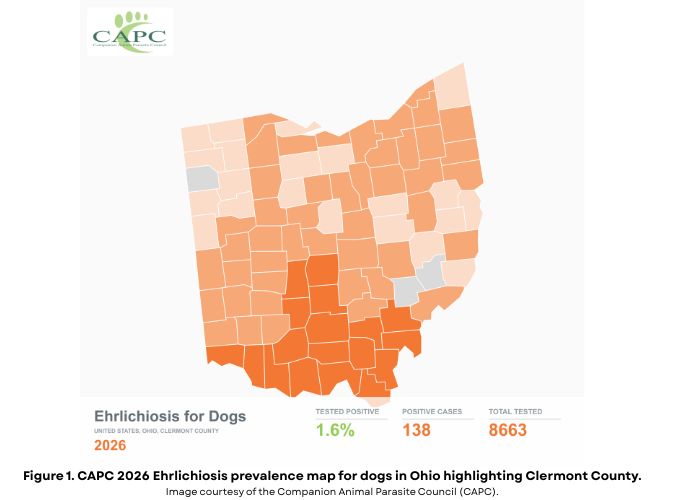
The map above illustrates that Ehrlichia is present in our local community, making consistent flea and tick prevention more important than ever. While many dogs exposed to Ehrlichia never become visibly ill, others can develop significant disease. Because exposure often occurs without owners ever finding a tick, we recommend year-round tick prevention and annual screening with the SNAP 4Dx® Plus Test as part of every dog's wellness care.
How Do Dogs Get Ehrlichia?
Exposure to Ehrlichia has increased in many areas of the United States as tick populations continue to expand. Dogs that hike, hunt, camp, visit wooded areas, or even spend time in suburban backyards can be exposed to infected ticks.
What Are the Symptoms of Ehrlichiosis?
Common signs include fever, lethargy, decreased appetite, weight loss, swollen lymph nodes, joint pain, lameness, bruising, nosebleeds, pale gums, eye inflammation, and occasionally vomiting or diarrhea.
Why Does Ehrlichia Cause Bleeding Problems?
A low platelet count (thrombocytopenia) is common. Platelets help blood clot normally, so affected dogs may bruise easily or develop spontaneous bleeding.
How Do Veterinarians Diagnose Ehrlichia?
At East Hills and Red Bank Veterinary Hospitals, we recommend yearly heartworm and tick- borne illness screening. During this test, we use a test to screen for Ehrlichia antibodies. If the test is positive, we may recommend a complete blood count (CBC), and additional testing such as PCR or antibody titers to verify that your dog is infected with the bacteria.
How is Ehrlichia Treated?
Most dogs respond well to a 28-day course of doxycycline. Severe cases may require hospitalization and supportive care.
Can Dogs Get Ehrlichia More Than Once?
Yes. Dogs do not develop reliable long-term immunity and can become infected again.
How Can You Prevent Ehrlichia?
The best prevention is tick prevention.
There is no vaccine. We recommend year-round flea and tick prevention, routine tick checks, prompt tick removal, and annual wellness testing.
Should My Dog Be Tested Every Year?
Yes. Annual screening helps detect exposure early.
When Should You Call Your Veterinarian?
If your dog has had a tick attached, develops fever, lethargy, limping, bruising, bleeding, or simply isn't acting normally, schedule an examination promptly.
Protecting Dogs in Cincinnati
At Cincinnati Family Vet, we believe prevention is always better than treatment.
If your dog has been exposed to ticks or is due for annual wellness testing, schedule an appointment with our team at Cincinnati Family Vet. Our veterinarians can provide options for year-round flea and tick prevention, heartworm screening, and comprehensive testing for tick-borne diseases to help keep your dog healthy.