

 Cat Anesthesia
Your veterinarian has just advised that your feline friend needs a procedure under anesthesia. Anesthesia can sound scary. Now you are feeling anxious and fearful of the worst-case scenario. While Dr. Bergman, a veterinarian at our East Hills location, has reassured you of the many safety measures that we recommend to keep your kitty safe, it still is worrisome.
At Cincinnati Family Vet, both of our locations are AAHA accredited, which means we practice the highest standards to keep your kitty safe. To avoid incorrect or misleading information found on the internet, we’ve taken the most frequently asked questions about cat anesthesia and answered them as thoroughly and accurately as possible to ensure you have the facts.
If your cat needs a service that requires anesthesia, our highly trained team in Loveland, Cincinnati and surrounding areas, our team is ready to help ease your fears and provide your cat the highest quality of care.
What is anesthesia?
Anesthesia is a medically induced loss of consciousness, preventing pain or a response to a stimulus. It works by interrupting the nerve signals in the brain and body, preventing any human or pet under anesthesia from processing pain or remembering what happened during the procedure.
What is the difference between anesthesia and sedation?
The main difference between anesthesia and sedation is the level of consciousness; with sedation being milder than anesthesia, your cat can still move around. While sedation “takes the edge off,” general anesthesia will render your cat fully unconscious and not feeling any pain.
Why would my cat need anesthesia?
Different types of procedures might require the use of anesthesia, including any that will cause pain or those that need your cat to be completely still.
Anesthesia in cats is most often used for:
- Surgical procedures, including mass removals, spays
- Wound stitching / laceration repairs
- Dental procedures
- Certain types of diagnostic imaging, such as skull radiographs, CT scans
How do I know that anesthesia is safe for my cat?
Before we anesthetize any pet at Cincinnati Family Vet, we always complete a thorough physical exam. This is critical in determining if your cat is healthy enough to be anesthetized and would reveal any issues that make it risky, such as a heart problem. We always recommend pre-operative bloodwork, ECGs and chest x-rays to evaluate the heart and to identify any potential risks. The AVMA offers a list of safety measures you can take to reduce your cat’s risks under anesthesia.
What do I need to know before my cat goes in for an anesthetic procedure?
At Cincinnati Family Vet, our registered veterinary technicians will meet with you and go over the procedure, review the anticipated charges and to go over all the required consent paperwork. We spend this time to ensure you understand everything that will be happening.
It’s essential to know how to prepare your cat for a procedure requiring anesthesia, including fasting your cat overnight – or withholding food. You need to know when to bring them in, so the doctors and staff are prepared to receive your cat. After the procedure, you’ll go home with instructions that your veterinary team will review with you thoroughly before leaving.
What are some possible complications of anesthesia that my cat could experience?
Anesthesia is never without risk, but your veterinarians will take every measure to minimize those risks. When they’re performing general anesthesia, they’re taking away control of your cat’s breathing. So, if your cat has any underlying respiratory or heart disease, that might pose a risk. If they have any other sicknesses, that might also put them at higher risk while under anesthesia.
What will my veterinarian do to ensure my cat is safe while undergoing a procedure?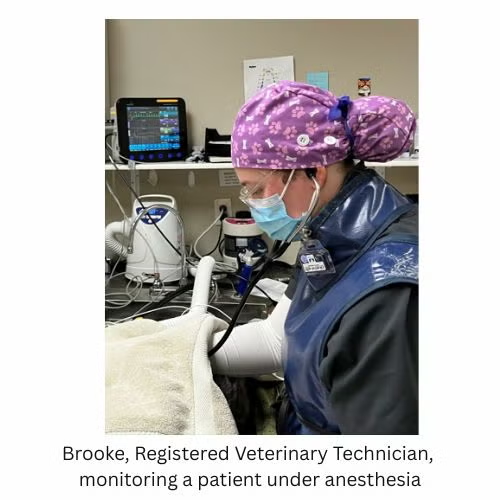
Many safety protocols will occur before administering anesthesia, such as a physical exam, blood screening, and x-rays. Prior to any anesthetic procedure, an IV (intravenous) catheter will be placed for safety. During anesthesia, our registered veterinary technicians are assigned to your pet and will closely monitor your cat. We will connect your cat to monitoring machines to monitor their condition, but your RVT will be constantly listening to your cat and monitoring them for any changes.
What type of care should I provide my cat as they’re recovering or coming out of anesthesia?
Immediately after a procedure involving anesthesia, your cat will be in the hospital and closely monitored. After post-surgical care at the hospital, your veterinarian will send your cat home once they're a little more awake, although they may be drowsy on discharge.
The drowsiness of a cat after a procedure depends on the following:
- The type of anesthesia
- Whether anesthesia was light or heavy
- The duration of anesthesia
- How your cat handled it
If your cat is overweight, they might take a little longer to recover from the anesthesia. If they’re still drowsy, you’ll want to keep your cat in a confined area with low light and low noise. The less stimulus, the better. Keep the cat in a safe area, meaning they can't jump up onto something and potentially fall off if they're still a little drowsy. You should also consider other pets in the home since they might be excited and ready to jump on them or play — but your recently-anesthetized cat may not be prepared for that level of activity.
At Cincinnati Family Vet, your pet is our priority. If you have any questions, don't hesitate to book an appointment or call our East Hills or Red Bank team. Our staff would love to talk with you!